
How to Choose a Grout Color for Your Tile
How to choose a grout color: match, contrast or split the difference, and how light, joint width and drying change what you see.
- Soft white
- Light gray
- Charcoal
- Cream
- Tan
- Taupe
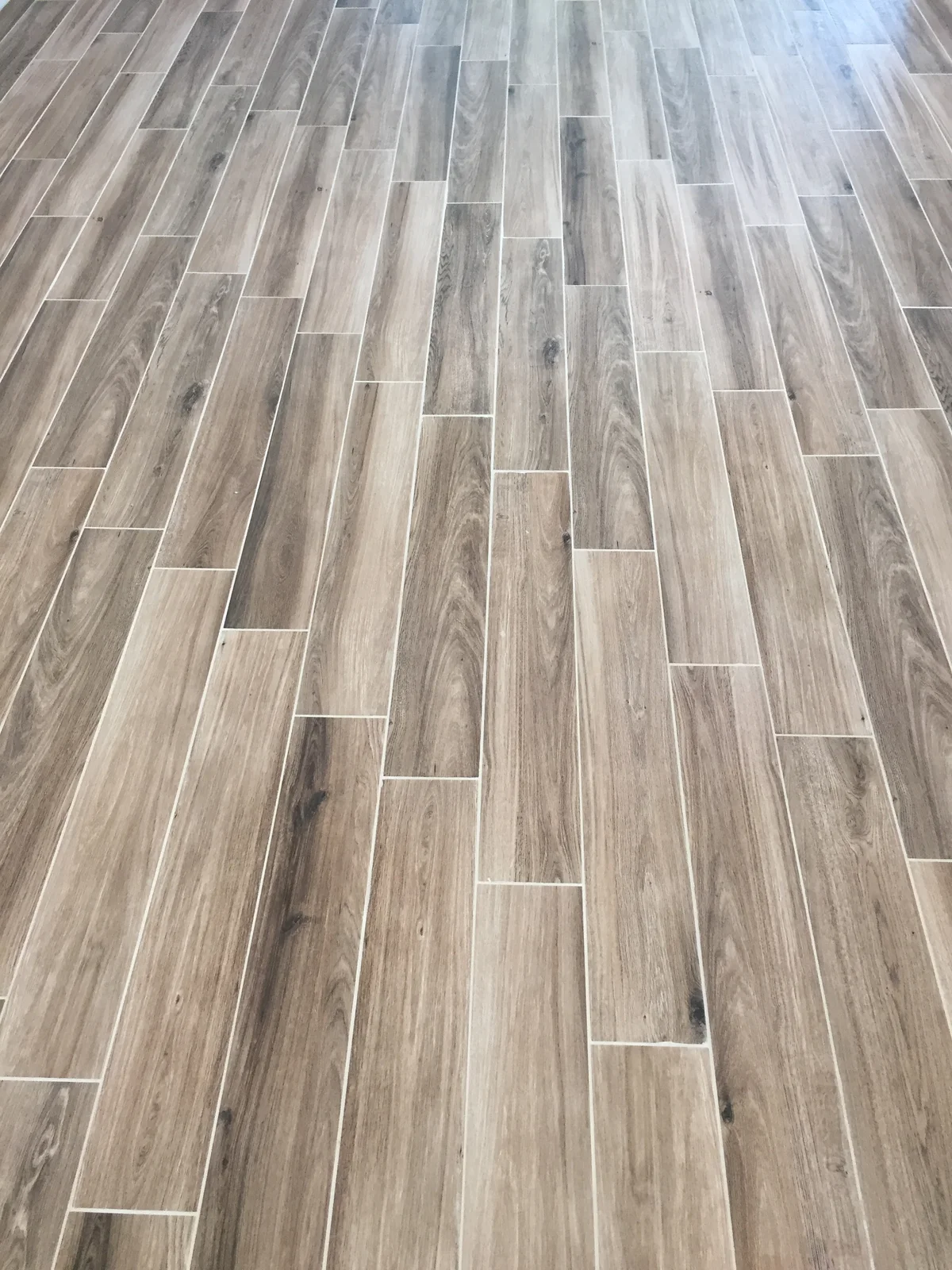
Pick the tile first, then decide how much you want to see the grout. Match it to the tile and the lines fade back. Contrast it and the lines turn into a pattern. Whichever you choose, look at it in your own light before anyone mixes a bag.
Most people pick a tile and then find out a second choice was waiting. It deserves some time, because grout fills every line between the tiles and is hard to change once it cures. Below is a way to decide, with a source for each point.
Match, contrast, or something in between
There are really only two moves. LATICRETE, a grout and setting materials maker, says to specify a grout similar to the tile color when you do not want it to distract, and says this can give larger tile a wide open feeling. To show off a layout such as herringbone or basketweave, it suggests a contrasting color that commands attention.
Bob Vila adds two rules of thumb. Lighter grout can make a small kitchen or bath feel larger. For strong contrast on white tile, go several shades darker than the tile.
Match Grout close to the tile color, so it does not distract. LATICRETE says this can open up a room with larger tile.
Contrast Grout clearly lighter or darker than the tile, so the layout shows. It works best when the pattern is the point.
Soft warm gray A designer quoted by Bob Vila suggests it for people who like white but worry about it getting dirty.
Test Ask whoever sets your tile for a sample board grouted in your pattern.
Honestly, if you are torn between two colors, take the one closer to the tile. A grout that is one step off the tile is hard to regret. A grout that is three steps off is a bigger bet, because you will see it every day.
What light does to a grout color
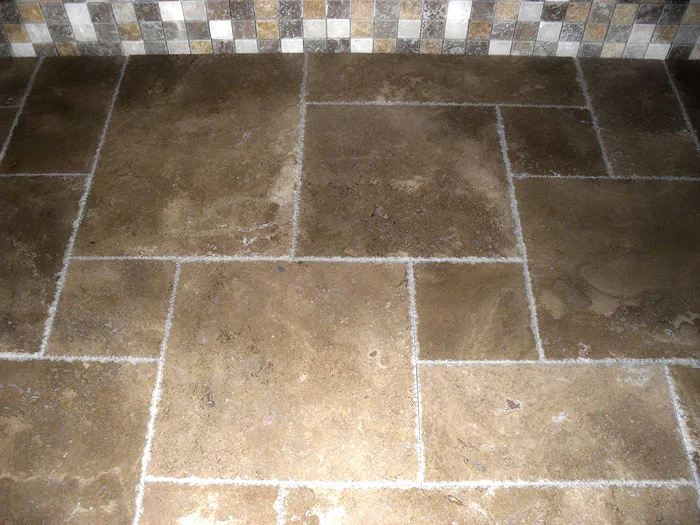
A grout color is not one color. It changes with the light, and Bob Vila tells readers to consider how natural and artificial lighting change the look. LATICRETE says the color you perceive varies with light, location and angle.
So a chip that looks right under a store’s lights can look different in your kitchen. Take the sample home. Look at it in the morning, at midday and at night with your lamps on. If the room has sliding doors to a lanai, that midday check matters most.
Do not choose from a screen. Stone World, a stone and tile trade magazine, warns that choosing from online or color photos is risky, because monitors may not show color accurately and there is little recourse after installation. It says the same about picking from one small piece on a sample board.
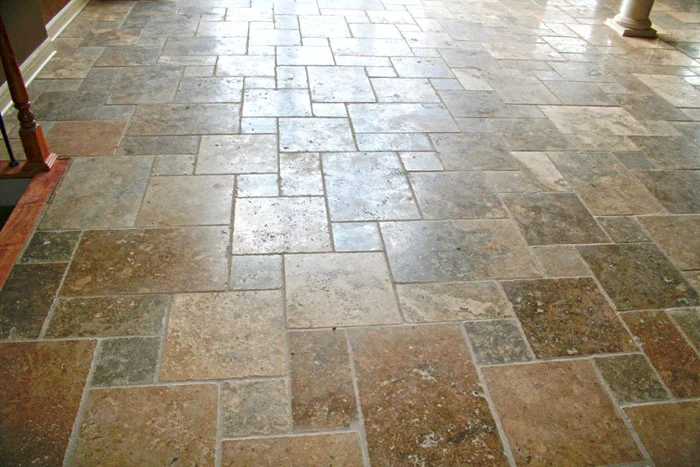
The dark stone photo above shows how a lighter line draws the eye along every tile edge. That is the “contrast” look. Whether you love it is a matter of taste, but you should know it is a choice.
Joint width and tile size set how loud the color is
The wider the joint, the more grout color you see. A mosaic is the extreme case, because it is lines in every direction. A large tile with a narrow joint shows far less.
Joint width is more than a style choice. The Ceramic Tile Education Foundation, a nonprofit for the tile trade, quotes the ANSI A108.02 standard: the joint must be at least three times the variation in the tile’s face size, and never under 1/16 inch. For tile with a side over 15 inches, it says the standard calls for an average joint of at least 1/8 inch for rectified tile and 3/16 inch for non-rectified tile.
Your installer sets the width within those limits, so ask what they plan before you fall for a color. A tight joint on a rectified tile will make almost any grout color look quiet.
Sanded or unsanded grout
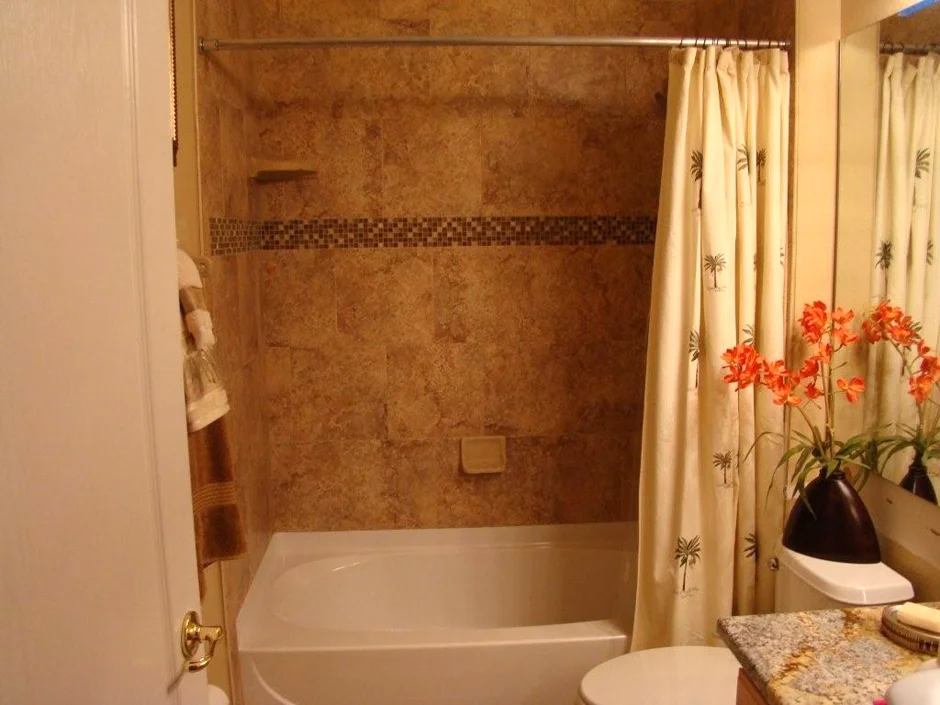
Joint width also decides the type of grout, and the type affects the colors you can get. Bob Vila says sanded grout is recommended for joints wider than 1/8 inch, and unsanded is made for joints 1/8 inch or less. Custom Building Products, a maker, says not to use non-sanded grout on joints over 1/8 inch. Bob Vila also notes that sanded grout comes in a wide variety of colors.
What shows dirt, and what a sealer does
Light grout gets the blame for looking dirty. Bob Vila quotes a designer who says some homeowners shy away from bright white because it can get dirty quickly or yellow over time. The same article says black grout hides dirt less well than gray.
Sealing matters more than most people expect. The Tile Council of North America (TCNA), a tile trade association, says in its color variation FAQ that cement-based grout tends to gray over time, and that sealers are now recommended. Custom Building Products says even on glazed tile the grout can get stained and needs sealing, and that sealer should go on 48 to 72 hours after grouting. It also says no sealer prevents all stains, and oil-based stains such as grease are hard to prevent and remove.
One limit to know. Bob Vila warns that sealing grout does not make a shower waterproof. The shower has to be watertight before the tile goes on.
Sealers can change the look too. Custom Building Products says penetrating sealers keep a natural look, while some others can deepen the color, and it advises testing in a spot nobody sees first. So tell your installer which finish you want before the grout goes in, and pick the sealer with the color in mind.
Why the color in the bag is not the color on the wall
This is the part that surprises people. Cement grout can dry to an uneven color. The TCNA says uneven grout color is not normal, but it lists many causes, mostly in the installation:
- Too much water in the mix, or water added after the first mix.
- Wiping too soon, or with too much water or a dirty sponge.
- Plastic spacers or thinset showing in the joint.
- Mixing part of a bag, or using grout from a bag that was opened before.
- Walking on the joints before they cure.
- Tile that pulls moisture out of the grout unevenly.
It also says medium grays and beiges are the easiest colors to control, while whites, blacks and bright colors are harder. And it says no ANSI standard addresses grout color variation, so there is no number to hold anyone to. LATICRETE says too much cleaning water can wash pigment out and leave a lighter shade, and that you should use bags with matching batch numbers and test a small area under real job site conditions.
Custom Building Products adds that grout can dry an uneven color if it loses moisture too fast in hot, dry weather. It suggests grouting in cooler parts of the day and misting the finished work.
None of that means avoid white or black. It means that if you choose one, ask more questions.
A grouted sample is worth the extra step
Stone World, in the same article, describes a mounted and grouted panel that shows the shade variation, the layout, and the joint size and color, made before the job starts. It admits the panel costs extra time and money, and says that is small next to a tear-out. Asking for one on a big floor or a visible wall is a fair request.
Epoxy grout
For the most even color, the TCNA says epoxy grout is often recommended. It is more expensive and cures and cleans differently from cement grout. Bob Vila says it is extremely durable but less pliable than cement grout. Custom Building Products adds that lighter epoxy colors may shift over time outdoors.
If the grout comes out the wrong color
You have options, and some are better than others. The TCNA lists them:
- Replace the grout. It calls this the only full fix if the result is unacceptable, and says to ask your installer about the workmanship.
- Grout colorant. Works best on unsealed grout. Sealed grout can be very hard or impossible to color. Test a small area first.
- Grout stain. An epoxy-based product that soaks in and seals the grout with a lasting color, after a deep clean.
- Paint. Epoxy paint can work on new, unsealed grout with sharp edges, but results are generally not as good as the original.
LATICRETE offers a gentler fix when the grout matches only while wet: a wet-look sealer that makes it look wet all the time, which may need reapplying.
Talk about this before the job, not after. Ask who fixes a color that comes out wrong, and what it would take.
What to ask before anyone grouts
Take this list to your installer, whoever it is:
- What joint width will you use on my tile, and which grout type goes with it?
- Can I see a sample board in my pattern, and at home in my own light?
- Will you grout from matching batches, and test a small area on site first?
- Which sealer do you use, and does it change the grout color?
- Is epoxy grout worth it for this room?
- What happens if the color dries uneven?
If you are choosing a floor, shower wall or backsplash, the grout belongs in the same conversation as the tile. Our own crew does the work, so we can talk through the pair with you. We also help people pick the tile in the first place, and our tile installation page shows what we set.
Picked a tile and not sure about the grout? Tell us about the room.
Where we work
We work out of Odessa, in Pasco County, and set tile for homes across Pasco, Pinellas and Hillsborough. Tell us which tile you picked, where it is going, and the grout colors you are weighing.
About the author
Andy's crew sets the tile floors and backsplashes this guide is about. Andy Tsiouklas is the owner of Trinity Tile and Stone. In Andy's words: "My father has been in the construction field all his life, and I ended up going the same route he did, keeping it in the family."
Related work
Grout is part of every tile job, and these two pages cover the tile it goes between.