
The Best Flooring for Pets: Tile, Vinyl Plank and More
Which floor holds up to dogs and cats? Tile and vinyl plank come out ahead, but the pet warranty and the grip matter as much as the surface.
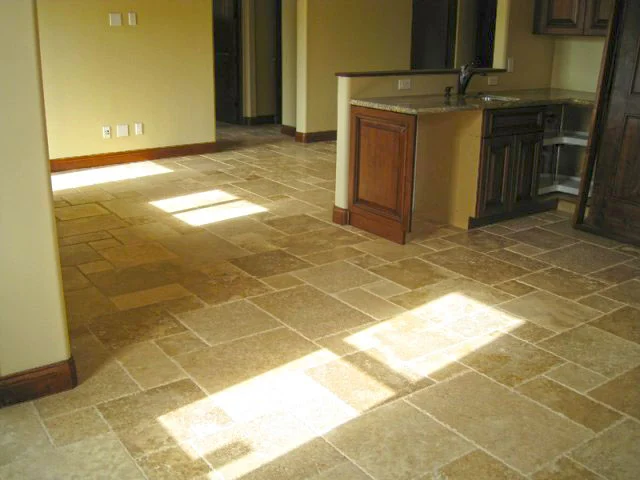
For most homes with a dog, porcelain tile or luxury vinyl plank is the safest bet. Tile is among the toughest against claws. Plank is softer and quieter underfoot. Hardwood and laminate can work, but each asks more of you.
No floor is perfect, though. A pet does three things to a floor: scratches it, soaks it and slips on it. The best pick depends on which one worries you most. We install tile, luxury vinyl plank, laminate, hardwood and carpet, so we are not a neutral party. Every point below names where it came from, and we have left prices out.
The three things a pet does to a floor
Scratches. Nails are the obvious one. Bob Vila notes that even the most well-groomed dog has nails that can scratch a sensitive floor. The National Wood Flooring Association (NWFA), the trade group for wood floors, says to trim your pet’s nails regularly and still expect that scratches can happen.
Accidents. A puddle, a muddy paw or a tipped water bowl tests the surface and the seams. The NWFA says to wipe water dish spills up right away with a dry or slightly damp cloth. A floor that is waterproof on top can still fail at the edges, and we cover that below.
Grip. This one gets skipped on the box. A veterinary paper in Frontiers in Veterinary Science calls poor traction on slick surfaces a common problem in dogs. Its authors say dogs on slick floors often flex their toes and dig in with their nails. Their study did not measure slipping on tile or hardwood, so treat that as a vet’s observation, not a test result.
Noise counts too, mostly for you. We cover it in the table below.
Read the pet warranty before you pick a color
Here is the part most guides skip. Many floors come with a pet clause in the warranty, and the fine print shapes what you actually get.
Take Shaw’s Pet Perfect warranty for resilient floors. It covers stains from a pet’s urine, feces and vomit, and it covers scratches from household pets for 30 years. That sounds complete. Then you read on:
- A covered scratch has to be a permanent mark that cleaning will not remove, and it must be visible from a standing position in normal lighting.
- The fix is to replace the damaged planks or tiles, not the whole floor.
- Water is covered only if it does not flow over the edge of the surface. Flooding and standing water from a leak are excluded.
- It applies to the original buyer of an owner-occupied home, with the original invoice.
Shaw’s laminate warranty adds that cleaning of a pet stain should begin immediately upon discovery. It also says damage from too much moisture at the ends or sides of the boards is not covered.
Other makers write their own terms, and these two are only examples. So ask for the warranty for the exact floor before you buy it, and read the pet part first. If a pet accident sits for a day while you are at work, you want to know that now.
Porcelain tile: the toughest against claws
Bob Vila calls tile one of the more durable materials against the scratches and dents that come from little nails. It also says smooth tile is easy to clean after muddy paw prints or puppy accidents.
Two cautions. First, grout. Bob Vila says grout lines can get dirty and stained over the years, so pick a grout color you can live with and expect to clean it.
Second, grip. Tile is hard and can be slick under a nervous dog. The Tile Council of North America explains that ANSI A326.3 is the test method for measuring a tile’s dynamic coefficient of friction, which is how grip is measured. So ask for that number on any tile you like. Then ask whether the finish is polished or matte.
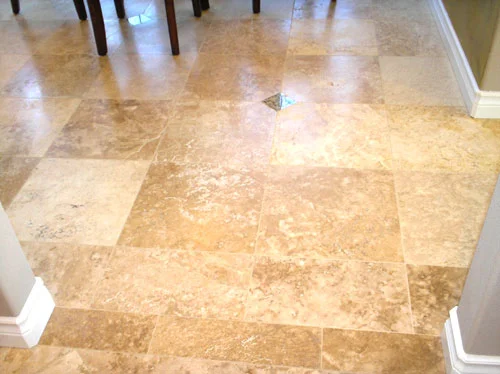
If a big dog and a busy kitchen describe your home, tile is the first floor we would look at. Our tile installation page shows what we put in. The tradeoff is comfort. Bob Vila notes tile can feel cold underfoot in winter, and the BNP Media course above says hard surfaces can create real noise problems.
Luxury vinyl plank: softer, and quieter
Plank is the pick when you want something easier on paws and ears. Bob Vila says vinyl is generally waterproof and tends to be less of a slip concern, and that it can dull over time, so look for a thicker wear layer. It notes wear layers are measured in mils and run from 6 to more than 20.
On noise, an underlayment maker quoted in Floor Covering News says floating vinyl floors typically do not produce the loud noise associated with other floating floors. That is a maker’s own claim, so check it in person.
The catch is the word “waterproof.” The Shaw warranty above covers topical moisture, not water running over the edge. A plank can shed a spill and still let a slow leak find the seam. So wipe up accidents fast, whatever the box says. If you want to see what we offer, read our luxury vinyl plank page.
Laminate: tough on claws, wary of standing water
Laminate can take claws well. Bob Vila calls it scratch and scuff resistant and suggests a rating of abrasion class 3 or higher. It also warns that standing water can damage laminate, so some boards are a poor match for a dog that tips bowls or has accidents. Some lines are sold as waterproof, and the warranty tells you how far that goes.
The other warning is grip. Bob Vila calls laminate very slippery, a hazard to some dogs, and suggests a textured finish or an area rug or runner. On sound, the same Floor Covering News piece says laminate often sounds hollow underfoot. If you are weighing it, our laminate flooring page shows what we install.
Hardwood and carpet: the two that ask the most
Hardwood shows nails. Bob Vila says many owners avoid it because dogs’ nails can damage it. The NWFA is more relaxed. It says scratches are usually in the floor surface only and easy to repair, and that a flooring professional can apply a maintenance coat for light ones. Its other advice helps with grip: it warns that polishes, waxes and restorers can make wood slippery, and that wet and steam mops damage the finish over time. It also suggests breathable rugs at the doors.
Carpet is the grippiest and the quietest. Bob Vila calls it nonslip and says it will not show gouges the way hardwood does, though sharp claws can damage it. On sound, a course from BNP Media says carpet absorbs sound and vibration to a high degree. The price is cleanup. Bob Vila notes liquid messes are harder to clean from carpet, so choose a stain resistant kind.
Which wood holds up best
If you want wood anyway, pick a hard one. Wood hardness is measured on the Janka scale. Hardwood Floors Magazine explains the test: it measures the force needed to press a small steel ball halfway into the wood. It gives northern red oak a rating of 1290 and sugar maple 1450.
Bruce, a wood flooring maker, says the higher the score, the better the wood stands up to wear, and that hickory has the highest rating of the domestic hardwoods at 1820. It also says a matte or satin finish hides scratches far better than a glossy one. Bruce sells these floors, so take that as a maker’s advice, but the Janka numbers are a fair way to compare.
Grip: the fix is often cheap
Slick floors are worth a plan, especially for a puppy, an older dog or one that is a little unsteady. The Frontiers paper says the dogs it describes as weak or ataxic, meaning unsteady on their feet, sustain new injuries or worsen old ones at surprising frequency from slipping. That comes from the authors’ own clinical experience, not from a measured study, so read it as a warning from vets who see this, not as a number.
You do not have to rip out a floor to help. Bob Vila suggests an area rug or runner to make a slippery laminate floor safer for dogs. The NWFA suggests breathable rugs at the doors of a wood floor, mainly to limit tracked-in dirt and protect the finish. Put both ideas together and you have a simple routine: rugs where your dog turns, starts and stops, near the food bowl, at the door, at the foot of the couch.
Nails matter here too. The Frontiers authors say dogs on slick floors dig in with their toenails, and the NWFA says to trim nails regularly. Short nails scratch less, so this one habit helps on every floor in this guide.
Floors side by side
Ratings come from the sources named in each box. Where no source rates a cell, it says so.
| Floor | Scratches | Accidents | Grip | Noise |
|---|---|---|---|---|
| Porcelain tile | Holds up well (Bob Vila) | Easy to clean, grout can stain (Bob Vila) | Ask for the friction rating (TCNA) | Hard surface, can be noisy (BNP Media) |
| Luxury vinyl plank | Holds up, wear layer matters (Bob Vila) | Waterproof on top, edges are the limit (Shaw) | Less of a slip concern (Bob Vila) | Quieter, a maker's claim (Floor Covering News) |
| Laminate | Holds up, check the abrasion class (Bob Vila) | Keep standing water off, check the warranty (Shaw) | Can be slippery (Bob Vila) | Can sound hollow (Floor Covering News) |
| Hardwood | Shows wear, surface scratches repair (NWFA) | Wipe spills right away (NWFA) | Skip waxes and polishes (NWFA) | Check the warranty |
| Carpet | Hides gouges, claws can damage (Bob Vila) | Hardest to clean, pick stain resistant (Bob Vila) | Nonslip (Bob Vila) | Absorbs sound (BNP Media) |
What about cats?
Cats scratch on purpose. The American Association of Feline Practitioners says in its position statement that scratching is a normal feline behavior. It lists scratching posts and pads and regular claw trimming among the alternatives to declawing.
So for a cat, a scratching post does as much for your floor as the floor itself. Then pick from the floors above based on how you want to clean up litter, spills and the odd accident.
Questions to ask before you buy
- What does the pet clause say, and does it cover scratches, stains or both?
- Is water covered at the edges and seams, or only on the surface?
- What is the friction rating, and is the finish polished or matte?
- How thick is the wear layer, or what is the abrasion class?
- What goes underneath, and how does it affect noise?
- Does the warranty follow the floor if I sell, or stop with me?
You are welcome to bring your answers, and your dog’s habits, to our showroom in Odessa. Samples tell you more than a photo does.
Picking a floor your dog or cat can live on? Tell us about the room and the pet.
Where we work
We work out of Odessa, in Pasco County, and install floors across Pasco, Pinellas and Hillsborough. Tell us which rooms the pets use most and what floor is down now.
About the author
Andy's crew installs tile, luxury vinyl plank and laminate in homes. Andy Tsiouklas is the owner of Trinity Tile and Stone. In Andy's words: "My father has been in the construction field all his life, and I ended up going the same route he did, keeping it in the family."
Related work
These are the floors this guide points to most, and each has its own page.