
Quartz, quartzite or granite: how to choose a countertop
What separates quartz, quartzite and granite countertops: what each is made of, heat, sealing, seams, and how to check that a quartzite is real.
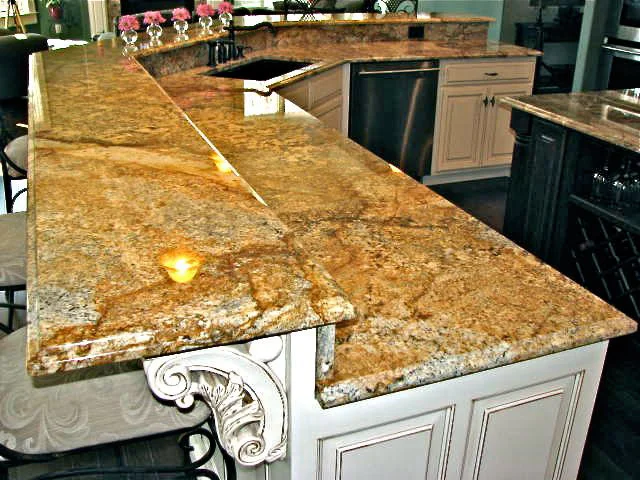
The three names sound alike, and two of them are nearly the same word, but they are very different things. Quartz is made in a factory. Quartzite and granite come out of the ground.
Here is the short version.
Quartz if you want a color that matches the sample and a top you never have to seal.
Quartzite if you want the veined look of natural stone and you are willing to seal it and to check that it is real.
Granite if you want natural stone that can also go outdoors.
We install all three as part of our countertop work, so we are not a neutral party. Each point below names its source, so you can read it for yourself. We have left prices out, because a price depends on your kitchen and the slab you pick.
What each one is made of
Quartz is an engineered product. Bob Vila describes it as 93 percent natural quartz stone combined with colors and resin. MSI, a stone supplier, says about 90%. The exact mix varies, but the point holds: it is crushed stone held together with resin. Many of the differences below come from that resin.
Quartzite is natural stone. The Natural Stone Institute, the stone trade’s association, says it is a metamorphic rock formed from sandstone. Metamorphic means heat and pressure changed it. The institute says it can be of exceptional strength, density and hardness.
Granite is also natural stone. Block Renovation, a company that matches homeowners with contractors, says it is made mostly of quartz and feldspar.
Here is how the three line up. The rest of this guide explains each row.
| Quartz | Quartzite | Granite | |
|---|---|---|---|
| Source | Made with resin | Natural | Natural |
| Sealing | Never | Yes | Usually |
| Hot pans | Use a trivet | Use a trivet | Use a trivet |
| Outdoors | No | Check the stone | Yes |
| Slab match | Close | Each differs | Each differs |
Heat: use a trivet on all three
Every source we read lands in the same place on this. Put something under a hot pan.
The makers are firm about quartz. Caesarstone says to always place hot cookware on a trivet or hot pad. Cambria recommends a closed weave hot pad or a solid trivet, and warns that sudden temperature changes near the edges can do damage. Bob Vila says extremely hot items may cause the resin to warp or burn. We looked for a temperature limit from a quartz maker and could not read one on a live page, so we will not give you a number.
Natural stone handles heat better, but it has limits too. The Natural Stone Institute says granite is typically heat resistant up to about 480 degrees Fahrenheit. It also discourages direct, localized heat, because strong temperature differences within the stone can start a crack.
Cabinet IQ, a remodeler, says quartzite generally handles high heat better than resin surfaces such as quartz, and still calls trivets a good habit. GoSource, a stone marketplace, says the same.
Sealing: where the three split
Sealing is a clear line between factory stone and natural stone.
Quartz
Cambria says its quartz counters never require sealing, polishing or reconditioning, and it tells owners not to apply sealers at all. Bob Vila agrees that quartz does not need a sealant. So if you buy quartz, skip the sealer. Follow your maker’s care page instead.
Granite
Sources agree on the direction but not on the schedule. Bob Vila says granite should be sealed when it is installed and then on an ongoing basis. Block Renovation says every one to three years. The Natural Stone Institute is milder. It says granite has very little room in its pores for a stain, and that repellents are sometimes used to raise its stain resistance further.
Quartzite
MSI says quartzite needs sealing regularly to stay resistant to water and stains. Block Renovation says at install and then every year or two, and sooner on some lighter colors, because they show stains faster.
We did not find a schedule from the Natural Stone Institute or a maker for either stone. No single number fits every slab, so ask the person installing your stone what they use and how often it should be done.
Is your quartzite really quartzite?
Very few guides cover this well, and it matters. Block Renovation says some suppliers label softer marble or dolomite as quartzite because they can charge more for it. Use Natural Stone, the Natural Stone Institute’s consumer campaign, puts it this way: there is really no such thing as soft quartzite, and in most cases that term means the stone is marble.
Why care? Marble reacts to acid. Lemon juice or vinegar can leave a dull mark on it. MSI says true quartzite will not etch from acidic liquids.
A test you can run on a sample
Use Natural Stone gives a simple test. Use a sample piece from that slab, not your finished counter.
- Put several large drops of lemon juice or vinegar on the surface.
- Leave them for 5 to 10 minutes.
- Wipe the sample dry and look at it from a low angle.
- Look for a dull spot where the polish seems to be gone.
A dull spot points to a stone that contains calcite or dolomite, not true quartzite. Sealer will not change the result. The same source says sealers do not protect a stone from acid, so the test works on a sealed or unsealed sample.
Block Renovation says you need a fabricator willing to perform tests, and that not all of them are. Asking for one is a fair request. Use only a sample for this, since a test can leave a mark.
Color, slabs and seams
What you see and what you get
Quartz is the most predictable. MSI says you can see a sample and know it will look the same when installed, and GoSource says it stays consistent from slab to slab. Bob Vila says the pieces of a quartz top will match in color and pattern.
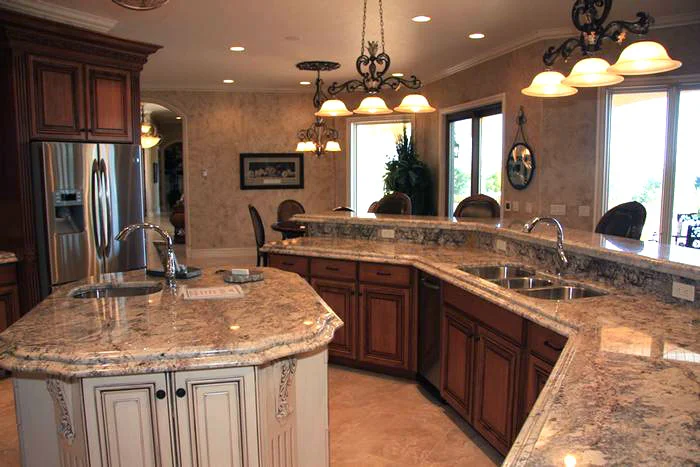
Even so, Caesarstone says the actual product may differ slightly from the sample, and it encourages you to view a full slab before you buy. Cambria says samples are small cuts from a larger slab.
Natural stone is another matter. Cabinet IQ says every quartzite slab is different. Block Renovation says small samples under showroom lights tell you almost nothing about how the stone will look. So for quartzite and granite, ask to see the actual slab going in your kitchen, and look at it in daylight if you can.
Seams
Plan on seeing them. Cambria says plainly that its product is not seamless and that seams are visible. Block Renovation says granite slabs max out at around 10 feet, so larger kitchens need more than one piece. It also says seams are never truly invisible.
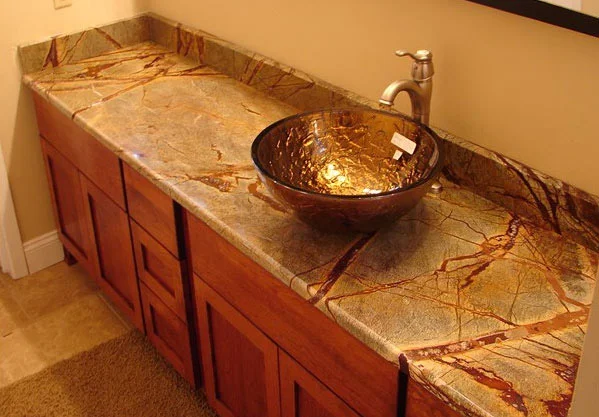
If you want veins to carry across a seam in quartzite, Cabinet IQ says that can take extra material and a more complex layout. Ask to see where each seam will fall before anything gets cut. Bob Vila also suggests checking the seams on a quartz top from time to time.
Scratches, chips and daily wear
Here the sources disagree, so be careful with anyone who gives you a firm ranking. MSI says granite beats quartzite on stains and scratches, particularly on light counters. Block Renovation and GoSource rank quartzite higher for scratches. We read no test data that settles it.
Some points are clearer. Cabinet IQ says quartzite edges can chip if struck hard enough, near sinks and dishwashers above all, and that edge choice and careful fabrication reduce the risk. Caesarstone calls its surfaces durable and nonporous, and asks you to wipe up wet spills.
Sun and outdoor kitchens
In Florida, this one can make the choice for you.
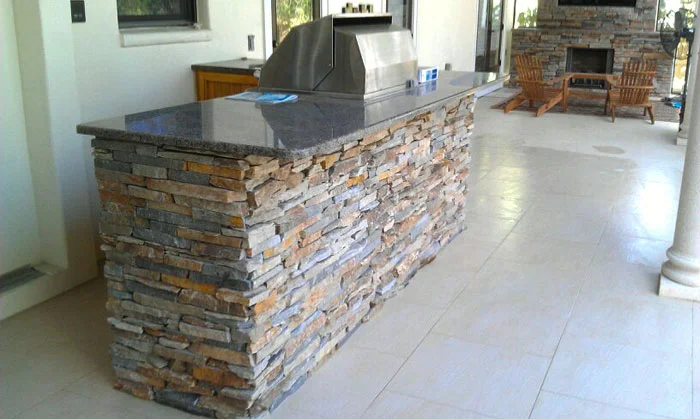
Bob Vila calls direct sunlight the biggest threat to the look of a quartz counter, and says quartz should be installed only indoors, never in an outdoor kitchen open to the sun. GoSource also says granite or quartzite is generally preferred outdoors, for sun stability and high heat.
Granite has a long record outside. The Natural Stone Institute says it has long been used as an exterior cladding and paving material. Cabinet IQ says quartzite has no resin to break down under ultraviolet light, and that it may suit certain outdoor kitchens where the stone and installation are right.
If a sunny lanai or a kitchen with a big window is part of your plan, bring it up early. Then read the quartz maker’s warranty for the color you like.
How to choose
Choose quartz if:
- You want the finished top to look like the sample.
- You would rather never think about sealing.
- The counter stays indoors, out of hard sun.
Choose quartzite if:
- You love the veining of natural stone and want no two slabs alike.
- You will keep up with sealing.
- You will run the acid test on a sample before you commit.
Choose granite if:
- You want natural stone with very little room in its pores for a stain.
- Outdoor use or a sunny spot is part of the plan.
- You are fine with some sealing upkeep.
What to ask before you buy
- Can I see the actual slab going in my home?
- Can I test a sample from this quartzite with lemon juice or vinegar?
- Where will each seam fall?
- What sealer do you use, and how often should it be redone?
- What does the maker’s care guide say about heat and sun?
- Which edge shape do you suggest near the sink and dishwasher?
Down to two countertop stones? Tell us about your kitchen and we can talk it through.
Where we work
All three go in from our base in Odessa, in Pasco County, to kitchens across Pasco, Pinellas and Hillsborough. Tell us about the kitchen or bathroom, how you cook, and which stones you are weighing.
About the author
Andy sells and installs all three of these. Andy Tsiouklas is the owner of Trinity Tile and Stone. In Andy's words: "My father has been in the construction field all his life, and I ended up going the same route he did, keeping it in the family."
Related work
All three are on our countertop list, and each has its own page.