
Porcelain tile or luxury vinyl plank for a Florida home
How porcelain tile and luxury vinyl plank compare on a concrete slab in Florida: water, sun, flatness, feel and repairs, with sources you can check.
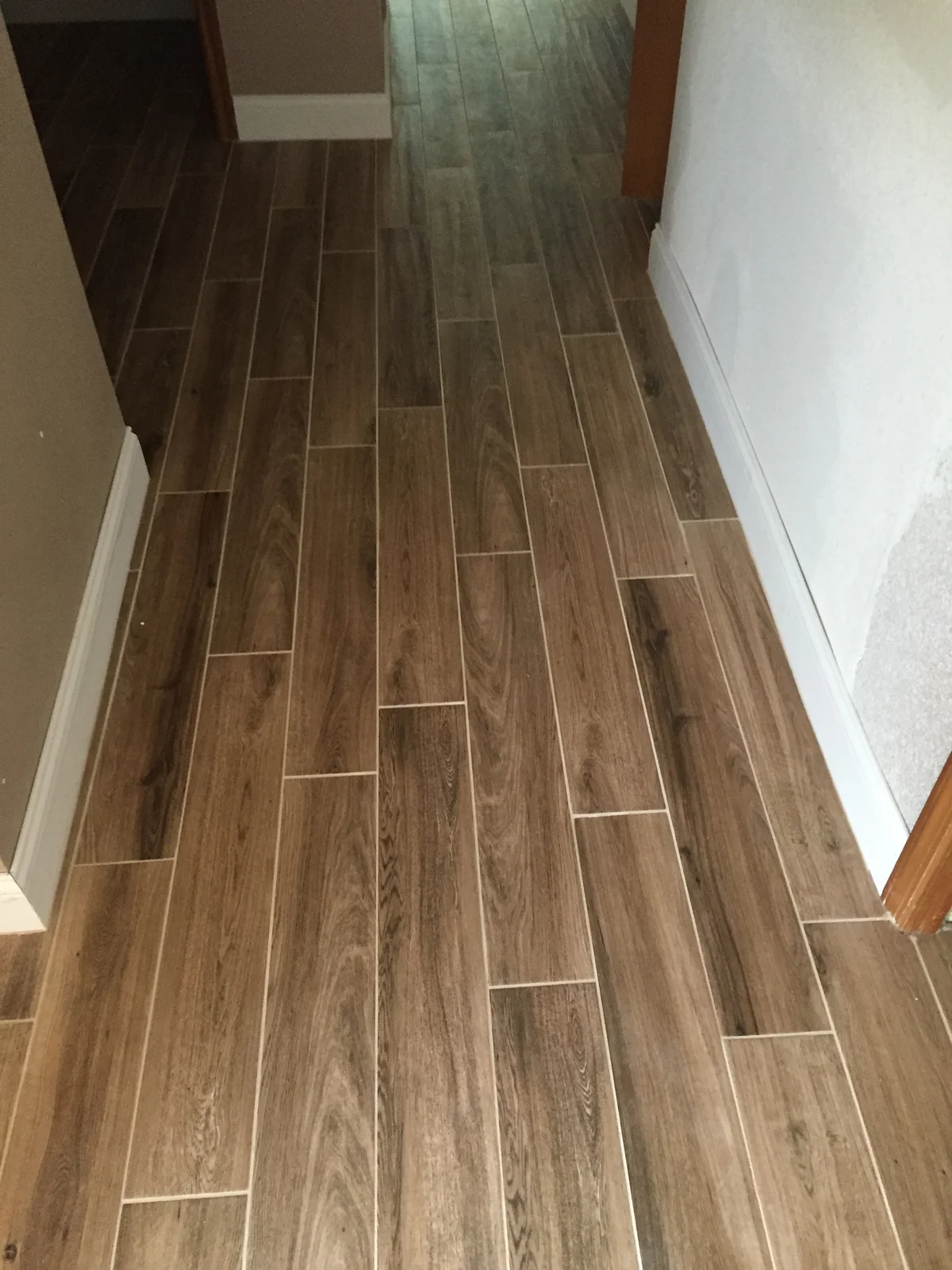
Both floors suit the inside of a Florida home. Neither one is a natural wood plank, so neither swells and shrinks with indoor humidity the way wood can. Tile Outlets, a retailer that sells both, makes that point and calls both a good fit for Florida interiors.
So the choice comes down to what worries you most. Porcelain is the stronger pick for water, hard sun and wear. Luxury vinyl plank is the stronger pick for a softer, quieter floor and an easier install. That is the same split Tile Outlets lands on.
We sell and install both, through our flooring installation, tile installation, luxury vinyl plank and wood look tile work. Weigh this guide the way you would weigh any seller’s view. That is why each point below names where it came from, so you can read it yourself.
What each floor is
Porcelain tile is a tile set in mortar, with grout between the pieces. Tile Outlets says industry standards define porcelain as tile with water absorption of 0.5% or less. Wood look porcelain is the same material made in long planks with a wood pattern on the face.
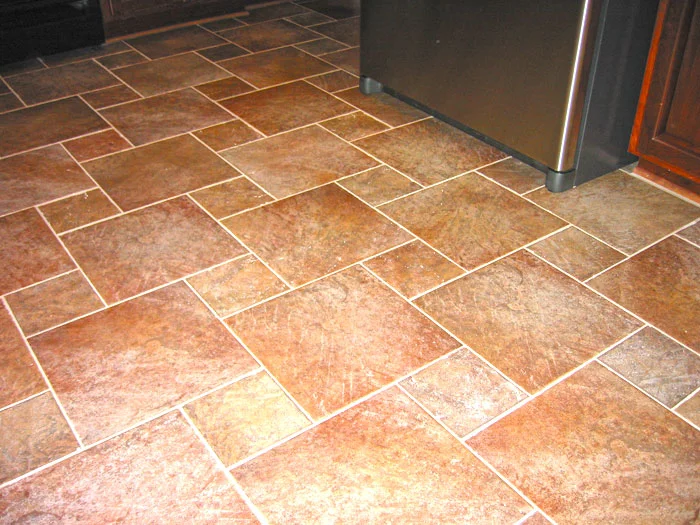
Luxury vinyl plank is often sold as a floating floor. That means the planks lock to each other and rest on the floor below, with no glue. MSI, a company that makes both, says many types use a click lock system. A Mohawk installation guide for one of its click planks says the same: it goes in as a floating floor, and gluing it down is not recommended.
That one difference, stuck down or floating, explains much of what follows.
| Your question | Porcelain tile | Vinyl plank |
|---|---|---|
| Water on the surface | Absorbs very little | Sold as waterproof |
| Water underneath | Check grout and what is below | May need to come up to dry |
| Hard sun | Very stable | Color can fade |
| Underfoot | Hard and cool | Softer and quieter |
What “waterproof” does and does not mean
This is the word that causes the most confusion. COREtec, a vinyl plank maker, calls its planks 100% waterproof on its Australian website. That claim is about the plank.
A floor is more than planks. Tile Outlets puts it plainly: a waterproof plank does not make the entire floor assembly waterproof. The Mohawk guide draws a similar line. It says vinyl tiles resist water damage but do not stop moisture from passing through, and it warns against letting moisture collect on either side of the floor, because of mold and mildew.
Porcelain has its own version of this. The tile absorbs very little, but the floor is also grout and what sits under it. MSI notes that moisture can seep between tiles, and it suggests a waterproof underlayment for extra protection.
So neither floor is a sealed box. Both handle a spill well. The real differences show up when a lot of water gets under them.
After a big leak or a flood
Tile Outlets says water from a major leak or a flood can travel between the joints or around the edges of a floating floor and get trapped below. In that case, it says, the flooring may need to be removed so the floor underneath can dry.
The same guide says porcelain’s surface takes in little water, but the grout, the setting material and what is under them still need to be looked at afterward.
Start with your slab
What is under the floor matters too. Tile Outlets says flatness matters with both materials, and on a slab home that means the concrete itself.
Flatness for long porcelain planks
The word to know is lippage, which means one tile’s edge sits higher than the one beside it. Tile Outlets says long porcelain planks need a flat base and careful installation to control it.
Daltile, a tile maker, says large format tile must go on a level base, with at least 90% mortar contact and a grout joint of at least 3/16 of an inch.
Flatness for floating vinyl plank
Vinyl plank is often called the easy option. MSI says a floating floor needs minimal subfloor preparation. Minimal does not mean none. The Mohawk guide asks for a floor flat within 3/16 of an inch over a 10 foot radius, with high spots sanded and low spots filled.
That number comes from one guide for one plank, and the copy we read is dated 2014. Your plank’s guide may say something else, and that guide is the one to follow.
Moisture in the slab
Vinyl plank makers set limits for moisture in the concrete. The same Mohawk guide says a slab should not go above 85% relative humidity, or 5 pounds on a calcium chloride test. It also asks the installer to record the results and give them to the owner for warranty purposes.
Other planks set other limits, so the numbers do not carry over from one product to the next.
Sun, heat and an empty house
Florida sun is where these two floors part ways most clearly.
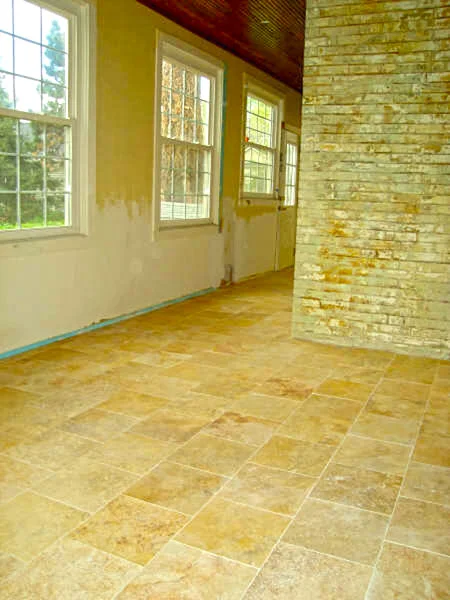
COREtec says direct sunlight can fade its floors over time and suggests window coverings. It also says its product must be stored and installed in a temperature controlled indoor space, between 15 and 29 degrees Celsius, which is about 59 to 84 degrees Fahrenheit. Installing it outdoors voids its product warranty.
The Mohawk guide sets its own conditions: 65 to 85 degrees Fahrenheit and humidity below 65% for 48 hours before, during and after testing and installation.
Those limits matter if a room has big west facing glass. They also matter if your home sits closed up for part of the year. Ask what the maker says about the air conditioning being set high or turned off while you are away. Tile Outlets says vinyl plank makers set their own temperature and sun requirements, so the answer depends on the plank.
Tile Outlets describes porcelain as exceptionally stable in heat and sun. It also says some porcelain is rated for indoor and outdoor use. That rating belongs to the product, so check it on the exact tile before you run it out to a lanai. Vinyl plank is the wrong choice there: Tile Center, a Houston showroom, says it is strictly for indoor use.
How each one feels to live on
This part is how a floor feels, and nobody we read measured it. Tile Outlets says porcelain feels like tile because it is tile, and it describes vinyl plank as softer, warmer and generally quieter. Tile Center says about the same.
Think about the rooms you stand in and who walks there. A kitchen floor you stand on for long stretches is a different question from a hallway.
Damage and repairs
Each floor fails in its own way.
MSI says porcelain is more likely to crack, break or chip if something heavy is dropped on it. It also says grout lines may need more care. Flooring Clarity, a flooring website that cites no sources, says vinyl can dent under heavy furniture.
Whichever floor you choose, keep what is left over. Tile Club, a tile seller, lists future repairs among the reasons to order extra, and the Mohawk guide says to store extra flooring flat in a climate controlled area for repairs.
We did not find a maker’s method for swapping out one tile or one plank, so ask how it would be done on your floor before you buy. The answer tells you what a bad day would look like later on.
How to choose
Choose porcelain tile if:
- Water is your biggest worry, in a room with a history of leaks.
- The room gets hard sun all day.
- You want the same tile to carry on outdoors, and the product is rated for it.
Choose luxury vinyl plank if:
- You want a softer, quieter floor under your feet.
- Your slab is flat, or can be made flat, and its moisture reading is inside the maker’s limit.
- The rooms stay cooled all year and the maker’s limits fit how you live.
What to ask before you sign
Good answers to these tell you more than any brochure:
- How will you check that my slab is flat, and what happens if it is not?
- Who tests the slab for moisture, and what limit does this product set?
- What does the maker say about sun, and about the house being closed up?
- Where do the expansion gaps or joints go? The Mohawk guide calls for a gap of about 1/4 of an inch at the walls.
- How much extra should I order? The Mohawk guide adds 5% for cuts and another 10% for a diagonal layout. Tile Club says 10 to 15% is often suggested for tile, and that your installer can give you the exact number.
- What happens to the floor that is down now? Tile Outlets says uneven areas, deep grout joints and loose tiles may need fixing first if the new floor goes over the old one.
- If a plank or tile gets damaged, how would you replace it?
Stuck between porcelain and vinyl plank? Tell us about the room and your slab.
Where we work
If your home is in Pasco, Pinellas or Hillsborough, we can install either floor. We work out of Odessa, in Pasco County. Tell us which rooms you want to change, whether they get hard sun, and what floor is down now.
About the author
Andy's crew puts down both of these floors. Andy Tsiouklas is the owner of Trinity Tile and Stone. In Andy's words: "My father has been in the construction field all his life, and I ended up going the same route he did, keeping it in the family."
Related work
We install both floors, and these pages say more about each.