
Cracked Floor Tile: Why Floor Tile Cracks
Floor tile usually cracks because the floor under it moved or flexed, or the tile was never fully backed with mortar. See the four causes and what to ask.
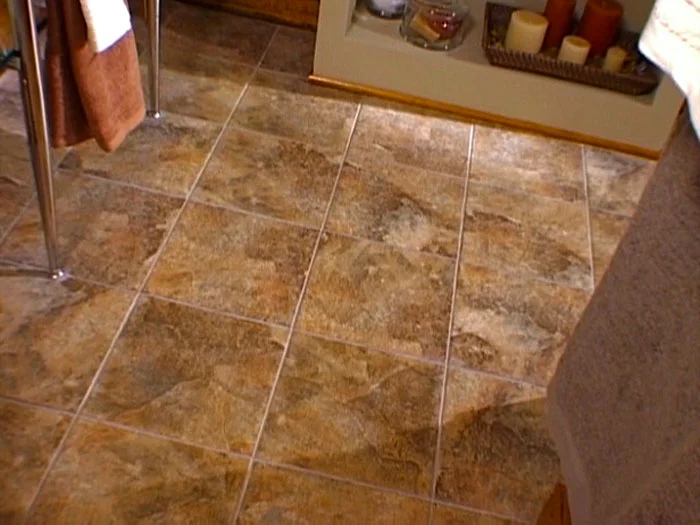
Floor tile cracks because something under it moved, flexed or was never fully holding it up. The tile itself is rarely the weak part. The testing lab at the Tile Council of North America (TCNA) says that when a tile meets the breaking strength in the ANSI A137.1 standard, it is likely the tile is not the problem.
That is worth knowing, because a cracked tile is easy to blame on the tile. The cause is usually in how the floor was built. Every point below comes from TCNA, the Ceramic Tile Education Foundation (CTEF), the National Tile Contractors Association’s magazine or a membrane maker, and each is linked so you can read it yourself.
Four causes, side by side
The same crack can come from more than one of these. Each column says what it looks like and what to ask.
Movement joints
Tile pops up in the middle of a floor. Ask where the movement joints are, and how they are finished at the edges. CTEF explains why they are required.
Coverage under the tile
A tile cracks or sounds hollow. Ask how the installer checks that the mortar reaches the whole back of the tile. TCNA lists poor coverage as a cause.
Substrate cracks
A crack in the tile follows a line in the concrete below. Ask whether the slab has cracks or saw cut joints, and how each one is handled. TileLetter covers what can and cannot be tiled over.
Deflection
The floor feels bouncy, and the grout cracks first. Ask what the floor is made of and how it was checked for flex. TCNA names it as a cause of cracked grout and tile.
Before an installer can answer any of these, they need to see what is under the tile. We come back to that at the end.
Movement joints: the gap tile needs to move
Tile, mortar and the floor under them all move a little with heat and moisture. A movement joint is a planned gap that lets them. CTEF’s Scott Carothers writes that these joints are a requirement, not an option. Without room to expand, he says, tile can pop up, or “tent,” usually in the middle of the floor.
Where do they go? Carothers says the ANSI specifications call for a movement joint at a change in plane, such as where a floor meets a wall. He quotes the TCNA Handbook at not less than 1/4 inch for interior perimeters, and says trim or shoe molding often covers them. So you may not see the gap on your floor, and that is normal.
The joint also has to stay open. CTEF says the sealant must be 100 percent silicone, urethane or polysulfide, stuck to the sides of the tile and nothing else. A rounded backer rod keeps it from bonding at the bottom.
One more thing, and it surprises people. A membrane under the tile does not replace these joints. TCNA’s lab engineer, Katelyn Simpson, writes that all floor installations should have movement joints and that a crack isolation membrane does not remove the need for them.
Coverage: what holds the tile up from below
A tile sits on a bed of mortar. If the mortar touches only parts of the back, the rest is hanging over air. Donato Pompo of Ceramic Tile and Stone Consultants, writing in TileLetter, says voids under tile can weaken it and make it more likely to break under heavy objects and rolling carts.
There is a number for this. CTEF quotes ANSI A108.5, section 2.5.3: average contact area not less than 80 percent, rising to 95 percent on exteriors and showers, and spread well enough to fully support the tile. The same section checks it by taking up at least three tiles for inspection. Ask an installer how they would check yours.
Spreading mortar in spots is one way coverage goes wrong. Pompo says that method does not meet industry standards for coverage. TCNA lists other causes of loose tile too: thinset used after its working time ran out, or disturbed while it cured. A maker of uncoupling membranes, Schluter, puts too little mortar first on its own list of why floors crack.
Honestly, this is the cause you cannot judge by looking. Once the tile is down, the coverage is hidden. That is why it helps to ask about it before the job starts.
A crack in the slab can come up through the tile
Concrete is not finished when it is poured. TCNA’s lab says it will keep shrinking long after it is first cast, and that it can crack from shrinkage while it cures. Cracks in the concrete can then cause cracking in the tile above. The lab calls these reflective cracks.
The shrinking also puts shear force on the mortar, tile and grout. If that force beats the bond, the tile can let go of the floor, which the lab calls tenting. That is one reason a floor can show trouble in a newer house. The lab adds that the longer a slab cures before tile goes on, the better. It says many people suggest about a month of curing, and that some thinset makers allow less time with a premium latex modified mortar.
Saw cut and control joints in a slab are planned weak points. Pro Builder’s Richard Baker writes that tile often cracks across them when the tile runs straight over the joint. TileLetter’s technical team says joints in the structure cannot be bridged and should continue through the tile work. It also says a crack with vertical movement is treated as structural and cannot be tiled over, even with a membrane. If anyone is unsure whether a crack is moving, it says to get a further evaluation or a structural engineer.
A crack isolation or anti-fracture membrane can help over cracks that are not moving. The TCNA lab says it bonds to the slab so movement is not passed straight to the tile. Baker calls a membrane the best way to avoid cracks over concrete. Still, a membrane has limits, as the TileLetter piece shows.
A floor that flexes cracks the grout first
Tile is stiff. A floor under it can flex when someone walks across, and the tile and grout are stuck in the middle. The TCNA lab says excessive deflection over wood puts squeezing and stretching forces on the grout and tile. Grout usually cracks first. In worse cases the tile cracks too.
Pro Builder says the minimum floor stiffness before an underlayment goes down is L/360, which means the floor may not sag more than its span divided by 360. It adds that soft stone tile needs a stiffer floor. And a wood framed subfloor that flexes too much can crack even the hardest tile.
So what makes a floor flex? The TCNA lab points to joist spacing and span. TCNA’s grout page also names plywood layout and how much mortar is under the tile. The lab says floors under tile must meet the International Residential Code for homes. You cannot see any of that from above. A bounce you can feel underfoot is worth mentioning to whoever looks at the floor.
When tile pops up, or tents
Sometimes tile does not crack. It lifts, and two tiles push up into a little peak. People call it tenting.
Movement is the usual suspect again. The Ceramic Tile Education Foundation says expansion joints are not optional, and that without them, especially on floors that get sunlight, most installations that otherwise look well done will fail. TCNA says its handbook calls for room to expand and contract in every tile installation, and that movement joints go in more often where moisture or direct sun is expected.
So a floor in a sunny room, or by a sliding door, is worth a close look. If tiles are lifting, stay off them and have the floor checked, because the cause sits under the tile, where a quick look cannot reach.
Reading the clues: cracked grout and hollow tile
A crack gives you clues, but not a final answer. TCNA’s lab says it is impossible to name the exact cause of cracked or loose tile without a proper inspection.
Start with the grout. TCNA says defective grout is the least likely cause of cracked grout. It lists deflection, grout not packed fully into the joint, and too much water in the mix as other reasons. It also says a site visit is often needed to find the cause.
Then the sound. A hollow sound does not always mean trouble. TCNA says a floor can sound hollow even when the tile is stuck down firmly, and that it does not necessarily mean failure is near. Pompo says what signals loose tile is a change in sound from one area to another. A tile that sounds different from its neighbors is the one to watch.
Ceramic Tile and Stone Consultants says the only certain way to diagnose these problems is to take up tiles in several places and look at the back of them and the floor under them. That is the opposite of a quick answer, and it is the honest one.
What to ask before new tile goes down
You can use these questions with any installer, including us.
- Where will the movement joints go, and how are they finished at the walls?
- How will you check that the mortar covers the back of the tile?
- Does the slab have cracks or saw cut joints, and what will you do at each?
- How was the floor checked for flex, and what is it made of?
- Is a membrane going in, and what does its maker say about the joints?
If your tile is already cracking in several places, the clearest way to learn why is to see the floor beneath it. Our crew does floor removal and tile installation in house, so the same people who see the bare floor are the ones who set the new tile on it. We do this from our showroom in Odessa, and we are glad to talk through what you are seeing.
Cracked tile you want looked at? Tell us about the floor and we can talk it through.
Where we work
We work from Odessa, in Pasco County, and take on tile floors across Pasco, Pinellas and Hillsborough. Tell us which room has the cracks and what the floor sits on.
About the author
Andy's own crew takes out old floors and sets new tile in house. Andy Tsiouklas is the owner of Trinity Tile and Stone. In Andy's words: "My father has been in the construction field all his life, and I ended up going the same route he did, keeping it in the family."
Related work
These are the two jobs that start a floor over: taking out the old floor and setting new tile.