
Waterproof Flooring: What the Word Really Covers
What a waterproof label covers on vinyl plank and laminate, what it leaves out, and what to check under the floor, with sources you can read.
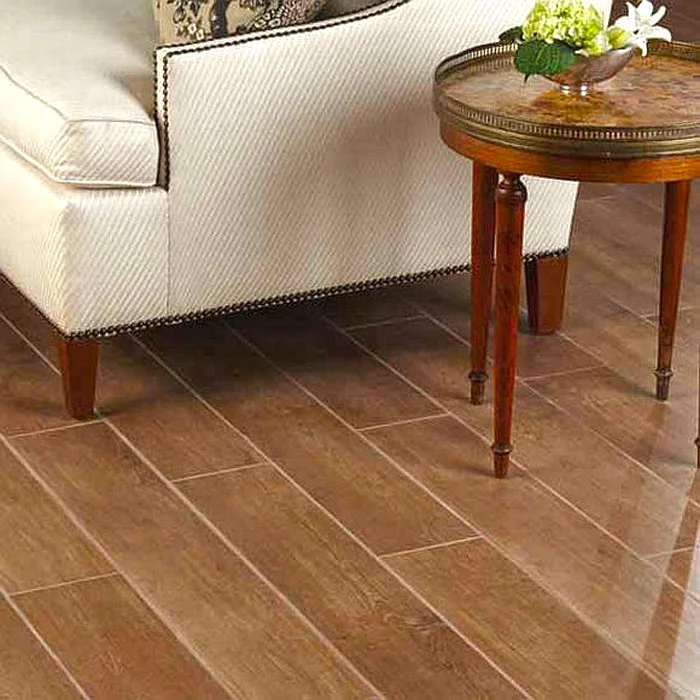
On a flooring box, waterproof almost always describes the plank, the part you walk on. It does not describe the seams between planks, the floor under them, or a room that fills with water. Water resistant is the smaller claim: the surface can handle a spill if you wipe it up.
That gap is where most of the trouble starts. This guide covers what the label does promise on luxury vinyl plank and laminate, where it stops, and what to ask before you buy. Each point names its source, so you can read it for yourself. We left prices out, because they depend on your room.
Waterproof and water resistant are two different promises
Start with the material. Bob Vila says the PVC in vinyl plank is 100 percent waterproof. The same article says water-resistant products should not go in areas of high humidity or frequent spills. So the two words are meant to sort floors into wet-room floors and dry-room floors.
Laminate lands on the other side of that line. Bob Vila’s laminate and hardwood comparison says laminate resists water damage in bathrooms and kitchens, but it is not waterproof, and water left sitting will eventually damage it. Its basement guide says laminate is only water-resistant and can be damaged if the basement floods.
Not every page agrees, even on one website. Bob Vila’s bathroom flooring page tells bathroom buyers to choose a fully waterproof laminate, not one described as merely water-resistant. That is a reminder that the word gets used loosely.
Lew Migliore, in a column on Floor Daily, a flooring trade site, goes further. He says there is no established industry standard for calling a floor waterproof. He notes that tests for water and edge penetration exist.
So the label means what the maker says it means. The only place to read that in full is the warranty.
What the label covers, and what it leaves out
Here is the claim split into the parts of a floor. Each box is as far as our sources go.
The plank
This is what the word is about. Bob Vila says the PVC in vinyl plank is 100 percent waterproof. That is a claim about the material in the board.
The seams and edges
Bob Vila's bathroom page warns that seams between vinyl tiles may allow moisture underneath. One maker's warranty, quoted by Floor Daily, protects only while water does not flow over the edge of the surface.
Standing water
Bob Vila says even fully waterproof vinyl plank will distort if submerged for long, and it may not survive flooding. A spill is one thing. A flood is another.
The subfloor
A maker quoted by Floor Daily says its floor will not act as a waterproofing barrier for the subfloor during standing water or flooding. Damage below the plank is often outside the promise.
Moisture from below
Mohawk says its vinyl tiles resist water damage but do not prevent moisture from passing through. Water coming up from a slab is a separate question.
Read together, the label is true and narrow. The plank is waterproof. The rest of the floor is a system, and the plank is one part of it.
Seams and edges: where water gets in
A luxury vinyl plank floor is often a floating floor. Bob Vila says that is by far the most popular way to install it: the weight of the planks and the walls of the room hold them in place. It also says to leave a small gap at the walls, sized by the maker. COREtec, a plank maker, asks for 6 millimeters next to walls and other floors on its Australian website.
Our reading, not a claim from a source: every one of those joints is a place the plank’s waterproof material does not reach. The seams run the length of the room, and the gap runs around its edge.
Makers know this, and some answer it. Bob Vila’s vinyl plank review says Mohawk offers water-tight joints. That is a product claim from one maker, so ask for it in writing for the exact floor you are buying. A different maker’s warranty, as Migliore reports it, protects the floor only while water stays off the edge of the plank. He asks how an installer could manage that, and his point is fair.
Laminate has the same weak spot. Bob Vila says the seams between laminate strips are typically more waterproof, and that if water gets through, laminate is less likely to wick it into the material. Less likely is not never. A Pergo laminate warranty that Lowe’s hosts says the floor will resist damage from damp mopping and everyday spills when they are removed promptly. Notice the last three words.
The seam is where one waterproof plank stops and the next begins. Unless the maker’s warranty says otherwise, the promise stops there too.
Standing water and floods: what warranties say
Here is where the word and the paperwork part ways. Migliore read six maker warranties for his column, without naming the makers, and found a pattern. Several cover water on top of the floor and exclude flooding, standing water and subfloor moisture. One 20-year waterproof warranty, he writes, excludes flooding and standing water from leaking pipes, faucets or appliances. Another maker calls its luxury vinyl tile 100 percent waterproof, yet says water can cause structural damage, which gets a prorated credit.
The Pergo warranty puts a number on it. Its laminate warranty does not apply to water damage from flooding, leaking pipes or appliance leaks, or from standing water, which it defines as water that stays on the floor longer than 30 minutes. That warranty is for a laminate line. We did not find a number from a vinyl plank maker, so do not assume a plank gets longer.
Bob Vila agrees with the direction. Its basement guide says vinyl plank handles spills and small seepage but can be damaged by flooding that leaves standing water.
Think about a dishwasher line that leaks overnight, or a washer hose that lets go while you are out. That is not a spill. By the maker’s own paperwork, it may not be covered.
Waterproof describes what the plank does on a wet day. The warranty describes what the maker will pay for on a bad one.
The floor under the floor
A plank sits on something. It may be a concrete slab or a wood subfloor. Either one has to be dry before the plank goes down, and the makers say so.
Mohawk’s guide asks that subfloors be dry, and that water-damaged, swollen or delaminated subflooring be replaced. For concrete, it says moisture vapor should not exceed 5 pounds by one test (ASTM F1869) or 85 percent relative humidity by another (ASTM F2170), with a pH between 8 and 9. If the humidity reads higher, it names a sealer to lower it. It also asks the installer to give the owner the recorded moisture test results, for warranty purposes.
Limits differ from maker to maker. Wagner Meters, a maker of moisture meters, says flooring and adhesive makers commonly require concrete at 75 percent relative humidity or less. It calls the relative humidity test one of the best options for checking a slab. Mohawk’s number is 85, and the Pergo warranty wants a polyethylene vapor barrier over a concrete subfloor before it applies. So read the paper for your floor, not a general rule.
Mohawk adds a line worth reading twice. Because vinyl does not stop moisture from passing through, it says to keep moisture from collecting on either side of the floor, to prevent mold and mildew.
That tells you how the maker sees it. If a waterproof plank fixed a damp slab, nobody would ask you to test the slab first.
Laminate: water resistant, and sometimes sold as waterproof
Laminate is where the label gets slipperiest, so here is the plain version. Bob Vila says it is not waterproof. Bob Vila also tells bathroom buyers who still want it to pick a fully waterproof laminate and to check that the manufacturer specifically approves it for bathrooms, and says water should not be allowed to pool on the surface for long.
So a laminate sold as waterproof is not a lie, but it is a claim to test. Ask what the maker means by it, how long a spill can sit, and whether the warranty covers a bathroom. A shelf tag will not answer those.
If you want a view, ours is simple. In a room that sees real water, such as a bathroom with a shower or a laundry room, we would look at vinyl plank or tile before laminate. In a room that stays dry, laminate flooring is a fair choice. That matches what our laminate page says.
For more on how plank and tile handle water side by side, see our guide to porcelain tile or luxury vinyl plank.
Which floor for which room
Match the promise to the room. Here is a plain way to sort it.
Spills and splashes, like a kitchen or entry. Any floor in this guide handles a spill you wipe up soon. The Pergo warranty is built on that idea.
A bathroom with a shower, or a laundry room. Look for a waterproof plank, tight seams, and a maker that approves it for wet rooms in writing. Bob Vila’s advice for bathrooms is to check for that approval.
A room that could flood. No label promises this. Bob Vila says even waterproof vinyl plank may not survive a flood. Plan on the floor needing to come up to dry what is under it, and ask what your homeowner policy says.
With our flooring installation work, we help you pick the floor, and our own crew installs it in house.
What to ask before you buy
Take this list to any showroom, ours in Odessa included.
- Does the warranty say waterproof, or water resistant? Read the exact word.
- What does it exclude: standing water, flooding, subfloor moisture, edges?
- How long can a spill sit before the maker calls it standing water?
- Is this floor approved for a bathroom or a wet room, in writing?
- What moisture limit does the maker set for the slab or subfloor, and who tests it?
- Do I get a copy of the moisture test results?
Read the fine print too. COREtec says on its Australian website that its planks are 100 percent waterproof, and also that installing outdoors voids the warranty. A word on the box and a rule in the warranty can both be true.
Picking a floor for a room that gets wet? Tell us about the room and what is under it.
Where we work
We work out of Odessa, in Pasco County, and install floors across Pasco, Pinellas and Hillsborough. Tell us which room gets wet and what the floor sits on.
About the author
Andy's crew installs luxury vinyl plank, laminate and tile. Andy Tsiouklas is the owner of Trinity Tile and Stone. In Andy's words: "My father has been in the construction field all his life, and I ended up going the same route he did, keeping it in the family."
Related work
These are the floors we install that come up most when people ask about water.